
A Beekeeper Explains Why the Price Raises Questions
I run about 30 hives in the rural South. I pull honey off the comb, strain it through mesh, and bottle it myself.
My cost per pound to produce real raw honey is higher than what Walmart charges you at retail.
That should make you stop and think.
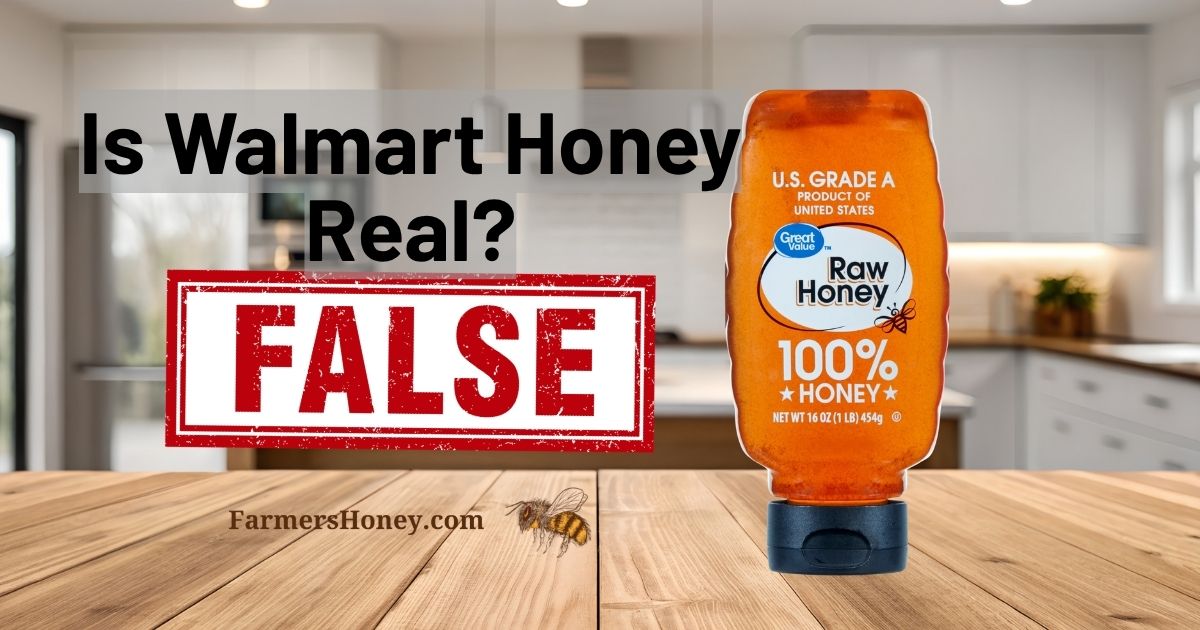
Walmart's Great Value Raw Honey sells for around $4 for a 16-ounce bottle. The label says Product of USA. Walmart also sells an organic honey that is labeled Product of Brazil.
No small American beekeeper can bottle honey by hand and consistently sell it at those prices.
So what is happening?
Let's break it down.
Why Is Walmart Honey So Cheap?
Honey from a small operation has real costs attached to it.
An average hive might produce 40 to 60 pounds in a decent year. Some years are worse. Equipment, replacement queens, mite treatments, supplemental feed, boxes, frames, extraction equipment, jars, labels, insurance, fuel, and labor all add up.
Then there is time.
Honey doesn't harvest itself.
Great Value raw honey is labeled Product of USA, so this isn't a story about cheap imported honey replacing American honey.
Instead, it's a story about scale.
Large commercial honey packers buy honey from commercial beekeepers across the United States, blend enormous batches together, and package it on high-speed production lines that supply thousands of Walmart stores. Honey is commonly stored in large drums before it's packed, and processors may warm and finely filter it so it bottles more easily and stays uniform on the shelf.
Costco honey works the same way, moving in 60 pound buckets for under $2 a pound.
The organic line is different. Because producing certified organic honey in the United States is extremely difficult, Walmart's organic honey is labeled as a product of Brazil.
That is how the economics work.
Is Walmart "Raw" Honey Actually Raw?
This is where definitions matter.
In the United States, there is no legal definition for the word raw when it comes to honey.
That means companies can process honey differently and still use the word.
Commercial honey is often warmed to improve bottling and filtered to remove wax and other fine particles. Some processors filter aggressively enough to remove nearly all visible pollen.
The result is a product that pours easily, stays clear longer, and looks nearly identical from bottle to bottle.
Is it legally honey?
Yes.
Is it the same as honey pulled from a hive, strained through mesh, and bottled by the beekeeper?
No.
Does "Product of USA" Mean It Isn't Processed?
No.
Origin and processing are two different things.
A Product of USA label tells you where the honey came from.
It does not tell you how it was handled afterward.
Domestic honey can still be blended from many producers, warmed during processing, finely filtered, and bottled months after it was harvested.
The label tells you where the bees worked.
It doesn't tell you how the honey was processed before it reached the shelf.
Credit where it's due, though. The Amazon Saver bottle doesn't even claim one country. It lists three.
Does Real Honey Crystallize?
Yes.
All real honey crystallizes eventually.
Crystallization depends on the natural balance of glucose and fructose in the nectar source. Some floral varieties crystallize quickly. Others stay liquid much longer. Temperature also makes a big difference.
Commercial processing can slow crystallization, but it cannot stop it forever.
If your Walmart honey crystallizes, that's generally a good sign that it's real honey.
Crystallization does not automatically mean the honey is raw or minimally processed.
It simply means it's behaving like real honey.
Crystallized honey is not spoiled. It's still perfectly good to eat. My own raw wildflower honey sets up firm every winter.
Is Walmart Honey 100 Percent Honey?
Under U.S. law, if a product contains added sweeteners, those ingredients must appear on the label.
The bigger question isn't whether Walmart honey contains corn syrup.
It's how much processing occurred before it reached the bottle.
Commercial honey is commonly blended, warmed, and filtered to create a product with a consistent taste and appearance year after year.
Kirkland Raw Unfiltered at Costco is blended the same way.
That's very different from buying honey directly from a beekeeper, where every harvest reflects different flowers, weather, and seasons.
Is Grocery Store Honey Good for You?
Honey will always be a better sweetener than many highly processed alternatives.
But not all honey is handled the same way.
Raw honey naturally contains enzymes, antioxidants, and trace amounts of pollen. Those compounds are sensitive to processing.
Commercial honey is designed for shelf life, consistency, and appearance.
If you're simply looking for a sweetener, grocery store honey does that well.
If you're looking for honey that stays closer to how it came out of the hive, processing matters.
What Real Honey Looks and Tastes Like
Real honey changes.
Spring honey tastes different from summer honey.
One beekeeper's honey can taste completely different from another's only a few miles away because the flowers are different.
Real honey may be cloudy.
It may contain tiny flecks of wax.
It may crystallize.
Most importantly, it has character.
It reflects an actual place, an actual season, and actual flowers. That is what raw wildflower honey is.
That's something a large blended commercial product simply can't reproduce.
The Bottom Line on Walmart Honey
Great Value honey is inexpensive because the system behind it is built for volume.
Large-scale commercial beekeeping.
Bulk purchasing.
Blending.
Commercial processing.
Efficient packaging.
Amazon's house brand honey runs on the same system, just sourced from further away.
It is legal.
It is widely available.
It is real honey.
But it is not the same thing as honey pulled from a hive, strained through mesh, and bottled by the beekeeper who harvested it.
You can buy cheap honey.
Or you can buy honey that reflects a specific season, a specific location, and the work of one beekeeper.
Those are not the same thing.
Where to Buy Real Raw Honey
Every jar of raw wildflower honey I sell comes from my own hives in the rural South.
I harvest it myself.
I strain it through mesh.
I bottle it by hand.
I never blend it with honey from other beekeepers or other countries.
If you're looking for honey that tastes like the flowers your bees actually visited, not just another bottle on a grocery shelf, take a look at my latest harvest below.
